GIFs are the twitchy, loopy language of the modernmemorificweb. Once you’ve come upon a GIF that expresses the real deep-down you—be it via a Michael Scott moment, a clip from Step Brothers, or a totes adorbes kitteh—you’ll want to share it with others!
But sometimes those little pieces of bitmapped magic need just a wee tweaking before they’re ready for primetime in an email or on Tumblr.
There are a number of programs and apps that will allow you to create your own giffy goodness, but if you just need a quick easy fix for a pre-existing gif, EZgif.com is a free one-stop shop.
EZgif’s easy web suite of editing tools.
The site offers a straightforward GIF tool belt, which allows you to crop, resize, optimize, and otherwise “fix” a GIF—all without the need to purchase any software or have any graphics training.
Tool time
You can choose which tool you want to use by clicking on any of the tabs at the top of the site’s page. You can then upload the file from your computer or directly from an existing URL.
For example, here’s a familiar friend captured in looping animated form, which I found on one of the many online repositories.
One caveat: When using the cropping function, it’s annoyingly unclear how to proceed once you’ve uploaded a file, but trust us, it gets more intuitive from there.
First, you hit the “set” button. You’ll then be presented with a small box in the corner of the image. Click and drag that to reveal a scalable, moveable box that you will use to mark your crop’s perimeter.
Once you find the perfect crop, hit the “Crop it!” button. EZgif will process it and you’ll be good to go. This process can take a few minutes—it depends on the size of your GIF. You will then have the option to manipulate the image further by clicking any of the options at the bottom of the screen, or downloading it by hitting the green “save” button.
The new, improved (or, at least, cropped) gif.
Below your scaling window, you’ll notice the pull-down menu with two options: Gifsicle and ImageMagick. Every EZgif function has various “engines” it utilizes as it processes the GIF. Due to the vagaries of gifdom, one engine will—on occasion—mangle your GIF. If that happens, simply begin again and try another option in the pull-down menu.
All the options
The “GIF Resize” option allows you to—wait for it—resize your GIF. Simply hit your new size based on number of pixels. If you leave either the width or height blank, the GIF will be scaled. Hit “Resize it!” and it will process the new gif below.
You get the point of how it works.
The “GIF Optimizer” option will allow you to shave down some of the data size of your gif by utilizing pre-calibrated optimization methods. The “GIF Effects” option gives you access to a few pre-selected effects like a sepia tone, black and white, or making the gif run in reverse.
Or you can create types of wholly unnecessary combination of filters as shown below:
Probably too many.
Finally, the “GIF Split” option will separate the gif into all its component slides and allow you to re-order them as you see fit. But that’s probably a more-advanced option than you want to take on if your only goal is a small change.
Now go out there and make the web a more seizure-inducing place.
What are the most striking features of the new version of Office Web Apps? The ones that aren't there.
It isn't the fact that the Save button has been nixed (shades of Google Docs!) or that multiple users can edit the same document in real time and not stomp all over each other's work. It's how little -- as opposed to how much -- variation there is between OWA and its desktop counterparts.
That small margin makes a big difference.
Better collaborative editing than the desktop Tony Bradley at PCWorld covers in detail all the new goodies in OWA, which still consists only of Word, Excel, and PowerPoint. The biggest is simultaneous co-authoring: Many users can log into OWA, open the same document, and work on it simultaneously. Flags within the document tell you where each user is.
One particularly smart touch here is how Microsoft has set different levels of editing granularity for each document type. For Word, it's a paragraph; for Excel, it's a cell; for PowerPoint, it's a slide. They're good commonsense defaults, and in my conversation with Microsoft's people, they hinted at the possibility that it could be made even more fine-grained.
From a practical standpoint, it's unlikely two people will attempt to edit the same sentence at once. But if Microsoft can nudge the line of thinking a smidge further in that direction, it's a sign of how completely Web apps could be able to eclipse their desktop cousins. For one, the desktop versions of these apps don't have anything like the simultaneous-editing features found in OWA -- a case where the Web app actually sports a feature superior to the desktop app.
This brings up the first of two big questions about OWA. Do Web apps need to displace their desktop counterparts?
The answer may be different depending on whether you're asking Microsoft or end-users. End-users may enjoy the convenience of OWA, but there comes a point where OWA simply can't deliver. The longer and more complex the document, the greater the odds OWA -- or your browser -- will simply gag.
There's little question that Microsoft needs to create a product portfolio off the desktop that's as valuable and rich as the one the company has created on it. But I doubt it can move people off desktop editions of Office and into OWA anytime soon, and not just because OWA's feature set is lacking.
There's something verging on unseemly in the glee so many journalists have taken in the disastrous rollout of the Affordable Care Act and in the incontrovertible fact that the Obama administration knowingly misled the American people about "keeping your plan". Magazine covers! Feuds! Late night comedians! Pursed-lipped statements of disappointment!
The "breakdown" of the ACA has made analysts bold: "The Collapse of the Obama Presidency","Why Obama's 'iPod Presidency' Was Doomed", "the entire presidency is riding" on the exchanges, the promise that "you can keep your plan" is (quoting Rush Limbaugh here) "the biggest lie ever told by a siting president."
A quick heads up for you folks (OK, you few folks) out there sporting Google Glass. The November update — XE11 — is now available.
New this month is the ability to designate home and work locations on Glass — just like you can in Google Maps, the easier to find your way home or to work. (And, more important, to route you around any traffic.)
You'll also be getting personalized calendar search, so you can ask Glass to show you what's coming up.
There's a new setup scheme as well, but you'll need to do a hard-reset to see that.
And finally there's a new shortcut in the notification drawer of your phone for screencasting.
Google's also changed up the shortcut for initiating a search. Instead of long-pressing the touchpad, you'll need to tap it three times slowly when the display is off.
We've seen it develop from a flexible, skeletal e-ink display into a stylus-friendly prototype and finally, Sony is now ready to sell its digital paper slab -- you might just have to save up a little more. A 13.3-inch touchscreen E-ink display is a pretty rare occurrence and, perhaps because of ...
First prospective study to date on nut consumption and pancreatic cancer in the Bristish Journal of Cancer
Davis, CA, November 7, 2013 In a large prospective study published online in the British Journal of Cancer, researchers looked at the association between nut consumption and risk of pancreatic cancer among 75,680 women in the Nurses' Health Study, with no previous history of cancer. Consumption of nuts, including tree nuts (such as almonds, Brazil nuts, cashews, hazelnuts, macadamias, pecans, pine nuts, pistachios and walnuts), was inversely associated with risk of pancreatic cancer, independent of other potential risk factors for pancreatic cancer.
Women who consumed a one-ounce serving of nuts two or more times per week had a significantly reduced risk of pancreatic cancer (RR, 0.65; 95% CI, 0.47-0.92; P=0.007) compared to those who largely abstained from nuts. "This reduction in risk was independent of established or suspected risk factors for pancreatic cancer including age, height, obesity, physical activity, smoking, diabetes and dietary factors," stated lead author, Ying Bao, MD, ScD, from the Department of Medicine, Brigham and Women's Hospital and Harvard Medical School, Boston, MA.
Pancreatic cancer is the fourth most common cause for cancer-related mortality in the U.S., yet very few modifiable risk factors have been identified. According to the 2009 World Cancer Research Fund/American Institute for Cancer Research (WCRF/AICR) report, aside from cigarette smoking, body fatness was the only convincing modifiable risk factor for pancreatic cancer.
While there may be concern that frequent nut consumption may result in weight gain and thereby increase the risk of developing pancreatic cancer, the opposite seems to be true. "In our cohort women who consumed the most nuts tended to weigh less," reported Dr. Bao. Moreover, in a recent analysis of this same cohort, higher nut consumption was associated with a slightly lower risk of weight gain and obesity.
Nut intake has also been associated with a reduced risk of diabetes mellitus, which is a risk factor for pancreatic cancer. "Nuts contain a variety of important vitamins, minerals and phytochemicals," states Maureen Ternus, M.S., R.D., Executive Director of the International Tree Nut Council Nutrition Research & Education Foundation (INC NREF). "This exciting, new study provides yet another reason to encourage people to eat a handfulor 1/3 cupof tree nuts every day."
###
The International Tree Nut Council Nutrition Research & Education Foundation (INC NREF) represents the research and education arm of the International Tree Nut Council (INC). INC is an international, non-profit, non-governmental organization dedicated to supporting nutrition research and education for consumers and health professionals throughout the world and promoting new product development for tree nut products. Members include those associations and organizations that represent the nine tree nuts (almonds, Brazils, cashews, hazelnuts, macadamias, pecans, pine nuts, pistachios and walnuts) in more than 40 producing countries. For more information, please visit our website at http://www.nuthealth.org.
Bao, Y., F.B. Hu, E.L. Giovannucci, B.M. Wolpin, M.J. Stampfer, W.C. Willett, C.S. Fuchs, 2013. Nut consumption and risk of pancreatic cancer in women. Br J Cancer. doi:10.1038/bjc.2013.665.
[
| E-mail
Share
]
AAAS and EurekAlert! are not responsible for the accuracy of news releases posted to EurekAlert! by contributing institutions or for the use of any information through the EurekAlert! system.
Tree nut consumption associated with reduced risk of pancreatic cancer in women
First prospective study to date on nut consumption and pancreatic cancer in the Bristish Journal of Cancer
Davis, CA, November 7, 2013 In a large prospective study published online in the British Journal of Cancer, researchers looked at the association between nut consumption and risk of pancreatic cancer among 75,680 women in the Nurses' Health Study, with no previous history of cancer. Consumption of nuts, including tree nuts (such as almonds, Brazil nuts, cashews, hazelnuts, macadamias, pecans, pine nuts, pistachios and walnuts), was inversely associated with risk of pancreatic cancer, independent of other potential risk factors for pancreatic cancer.
Women who consumed a one-ounce serving of nuts two or more times per week had a significantly reduced risk of pancreatic cancer (RR, 0.65; 95% CI, 0.47-0.92; P=0.007) compared to those who largely abstained from nuts. "This reduction in risk was independent of established or suspected risk factors for pancreatic cancer including age, height, obesity, physical activity, smoking, diabetes and dietary factors," stated lead author, Ying Bao, MD, ScD, from the Department of Medicine, Brigham and Women's Hospital and Harvard Medical School, Boston, MA.
Pancreatic cancer is the fourth most common cause for cancer-related mortality in the U.S., yet very few modifiable risk factors have been identified. According to the 2009 World Cancer Research Fund/American Institute for Cancer Research (WCRF/AICR) report, aside from cigarette smoking, body fatness was the only convincing modifiable risk factor for pancreatic cancer.
While there may be concern that frequent nut consumption may result in weight gain and thereby increase the risk of developing pancreatic cancer, the opposite seems to be true. "In our cohort women who consumed the most nuts tended to weigh less," reported Dr. Bao. Moreover, in a recent analysis of this same cohort, higher nut consumption was associated with a slightly lower risk of weight gain and obesity.
Nut intake has also been associated with a reduced risk of diabetes mellitus, which is a risk factor for pancreatic cancer. "Nuts contain a variety of important vitamins, minerals and phytochemicals," states Maureen Ternus, M.S., R.D., Executive Director of the International Tree Nut Council Nutrition Research & Education Foundation (INC NREF). "This exciting, new study provides yet another reason to encourage people to eat a handfulor 1/3 cupof tree nuts every day."
###
The International Tree Nut Council Nutrition Research & Education Foundation (INC NREF) represents the research and education arm of the International Tree Nut Council (INC). INC is an international, non-profit, non-governmental organization dedicated to supporting nutrition research and education for consumers and health professionals throughout the world and promoting new product development for tree nut products. Members include those associations and organizations that represent the nine tree nuts (almonds, Brazils, cashews, hazelnuts, macadamias, pecans, pine nuts, pistachios and walnuts) in more than 40 producing countries. For more information, please visit our website at http://www.nuthealth.org.
Bao, Y., F.B. Hu, E.L. Giovannucci, B.M. Wolpin, M.J. Stampfer, W.C. Willett, C.S. Fuchs, 2013. Nut consumption and risk of pancreatic cancer in women. Br J Cancer. doi:10.1038/bjc.2013.665.
[
| E-mail
Share
]
AAAS and EurekAlert! are not responsible for the accuracy of news releases posted to EurekAlert! by contributing institutions or for the use of any information through the EurekAlert! system.
New platformer arrives today on Google Play and Amazon Appstore
Platform veteran Rayman returns to mobile today with the launch of Rayman Fiesta Run, a new running game that follows on from last year's Rayman Junge Run. Like that title, Fiesta Run features fast-paced platforming across a range of colorful worlds, with a total 76 individual levels. The concept isn't new — run around cartoon worlds tapping the screen to jump, collecting glowing critters as you go. But Rayman Fiesta Run seems nicely polished, with slick visuals and new ways to play including "invasion mode," which can be unlocked by beating stages, and three boss battles to contend with.
Rayman Jungle Run is available now on Google Play and the Amazon Appstore, priced at $2.99 in the U.S. and £1.99 in the UK. For the price, it's definitely worth a look if you're a platformer fan. The game is also available on iOS from today.
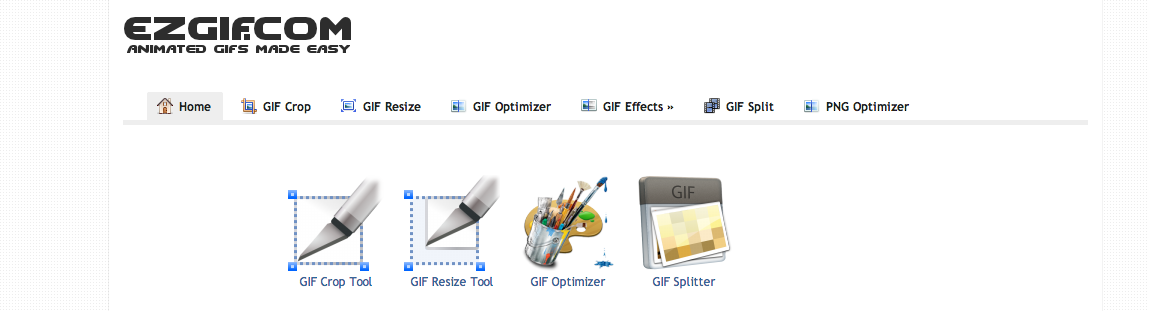 EZgif’s easy web suite of editing tools.
 The new, improved (or, at least, cropped) gif.
 Probably too many.


 Source:
  We've seen it develop from a flexible, skeletal e-ink display into a stylus-friendly prototype and finally, Sony is now ready to sell its digital paper slab -- you might just have to save up a little more. A 13.3-inch touchscreen E-ink display is a pretty rare occurrence and, perhaps because of ...


 Source:
 ![[ Back to EurekAlert! ]](https://lh3.googleusercontent.com/blogger_img_proxy/AEn0k_sTFUfT52kVcq0YUmydrgJOT8DMhGv9wkuBDQ7QTYTjZAEIq5wU8bqHxmzeu2Y-r7hkfJcmZN57OMztBBNzke295QJtpEVHxAnNelqqQmc=s0-d)
 Share
Share


 Source: